
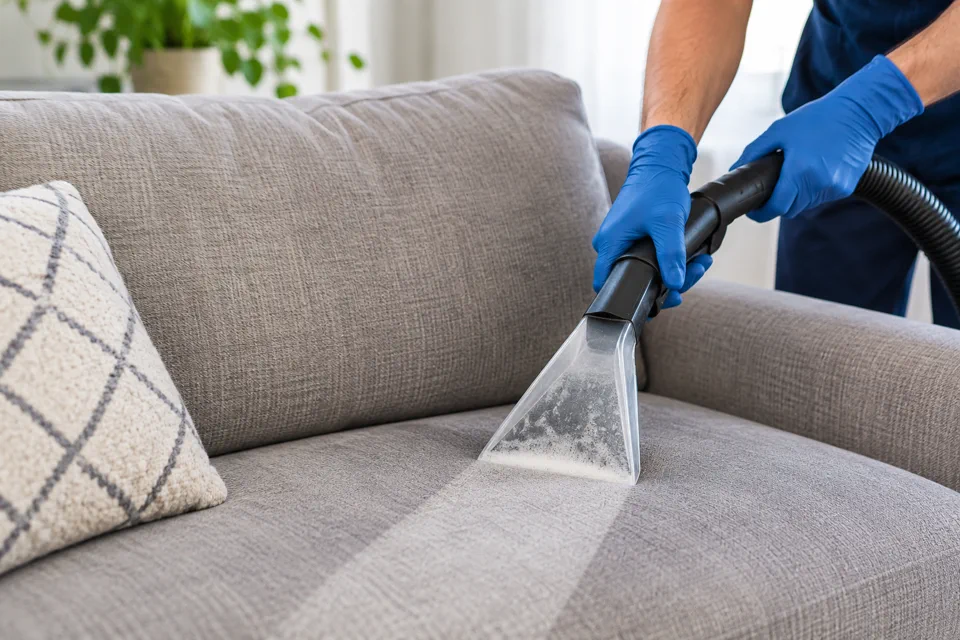
What to know about upholstery cleaning.
Upholstery cleaning customers often want to know whether a sofa, chair, or similar piece can be cleaned safely and how long the furniture may need before regular use.
Fabric type, age, dye stability, construction, and prior treatments can affect the right approach.
Common needs
Common upholstery concerns.
Sofas and chairs
Household seating can collect visible soil, oils, and everyday wear. Bob reviews the fabric and condition before cleaning begins.
Spills and use marks
Spills and marks can be evaluated, but results depend on the fabric, the age of the spot, and previous cleaning attempts.
Furniture-use guidance
Bob provides drying and use guidance based on the material, cushion construction, and room conditions.
General process
What to expect from upholstery cleaning.
Step 1
Discuss the furniture
Review the furniture type, material concerns, visible soil, spills, and access before work begins.
Step 2
Assess material and condition
Check fabric, construction, condition, and any concerns that could affect the cleaning approach.
Step 3
Clean the agreed pieces
Bob cleans the agreed pieces using an approach appropriate for the material and condition.
Step 4
Review drying and use
Talk through approximate drying considerations and when the furniture should be ready for normal use.
Upholstery cleaning FAQ
Questions customers often ask first.
Can every fabric be cleaned the same way?
No. The right approach depends on the fabric, backing, dyes, construction, condition, and care guidance for the piece.
How long does upholstery take to dry?
Drying varies by fabric, cushion thickness, airflow, humidity, and the cleaning needed. Ask for job-specific guidance before using the furniture normally.
Can upholstery stains be removed?
Some spots may improve, but removal should not be guaranteed before the furniture is inspected and the material is understood.
What should I do before the appointment?
Remove small personal items, clear access around the furniture, and mention any known spills, prior treatments, or delicate areas when scheduling.